

definition
Per- and polyfluoroalkyl substances (PFAS) are a large group of chemicals widely used in industrial and consumer applications since the 1950s. They possess unique properties—being both hydrophobic (water-repellent) and lipophobic (oil-repellent)—making them industrially indispensable for surface-active applications.
PFAS consist of a fully (per-) or partly (poly-) fluorinated carbon chain connected to different functional groups. According to the OECD (2021) revised definition, PFAS are fluorinated substances that contain at least one fully fluorinated methyl (-CF3-) or methylene (-CF2-) carbon atom (without any H/Cl/Br/I atoms attached).
The extreme strength of the C-F bond renders these molecules very resistant to thermal, chemical, and biological degradation, leading to the designation “forever chemicals”. Indeed, PFAS exhibits exceptional persistence, remaining in human bodies and the environment for decades, even after emissions have ceased.
Based on the length of the fluorinated carbon chain, short and long-chain PFASs can be distinguished. The length of the fluorinated carbon chain can result in different physicochemical properties that influence the substance’s behavior in the environment and in organisms, and its bioaccumulation and (eco) toxicity. In the perfluoroalkyl substances sub-group, perfluorooctanoic acid (PFOA) and perfluorooctane sulfonic acid (PFOS) are the most thoroughly studied substances.

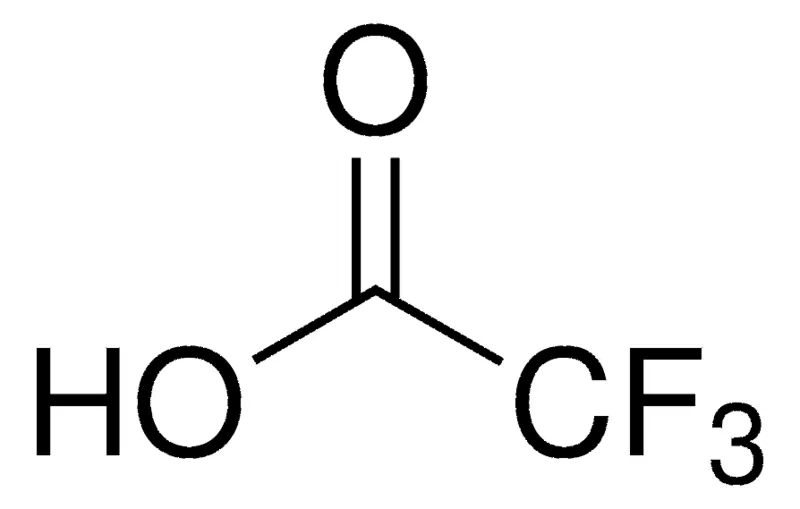
According to the OECD definition, even Trifluoroacetic acid (TFA) [9] is classified as a PFAS. TFA forms during the breakdown of bigger PFAS and certain fluorinated pesticides. It is not included in the European Drinking Water Directive, despite its large diffusion in water and food; it is mentioned in the Commission Notice – Technical guidelines regarding methods of analysis for monitoring of per- and polyfluoroalkyl substances (PFAS) in water intended for human consumption [10].




GOING FURTHER
Discover what Mérieux NutriSciences can do about this topic on our website: SERVICE PAGEBLOG ARTICLE You can also get more precise data using our specialized digital tools…