

definition
Last update: 28/05/2026
The genus Listeria has expanded significantly in recent years.
- Genus Overview: As of January 2024, the genus contains 28 recognized species, categorized into two main groups: sensu stricto and sensu lato. [1]
- Listeria sensu stricto: This group includes L. monocytogenes and nine closely related species that exhibit high genetic similarity. Key species include L. innocua, L. ivanovii, L. welshimeri, and L. seeligeri, as well as more recently described species such as L. swaminathanii and L. immobilis.
- Listeria sensu lato: This group consists of 18 species more distantly related to L. monocytogenes, such as L. grayi, L. rocourtiae, and L. fleischmannii. Some of these species lack hallmark traits like motility or the ability to grow at 4°C.
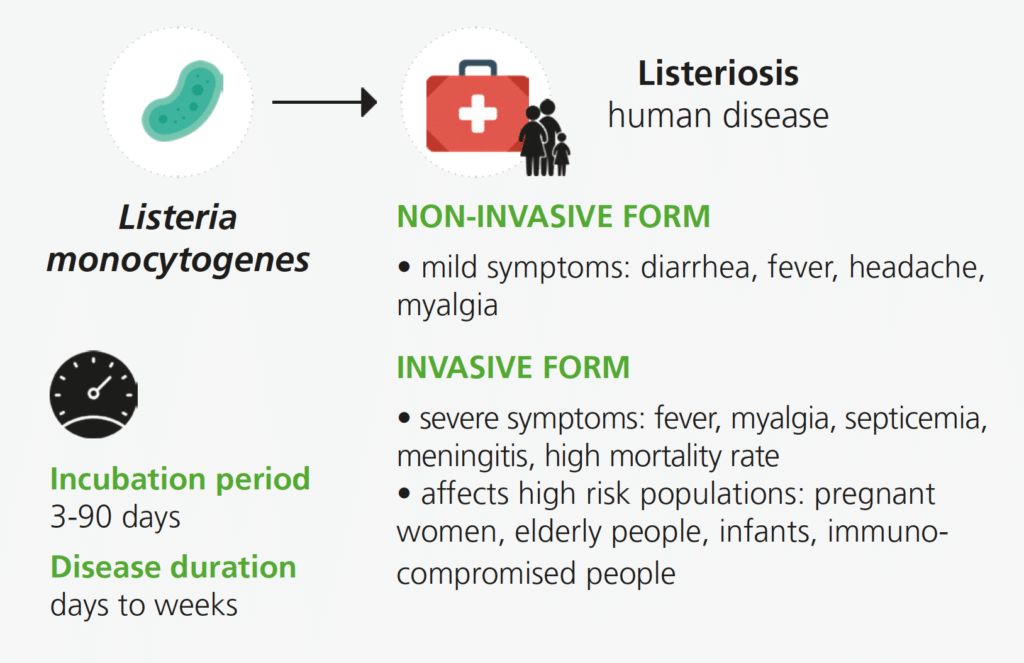
- Public Health Relevance: L. monocytogenes remains the primary species of public health concern as the causative agent of listeriosis. [2], [3]
- Clinically relevant serotypes include: 1/2a, 1/2b, 1/2c, 4b, historically linked to major outbreaks. [2]
Ecology and Environmental Survival
L. monocytogenes is widely distributed in soil, water, decaying vegetation, and animal reservoirs [1], [4].
Growth Parameters
The organism demonstrates significant environmental resilience [5]:
- Temperature range: growth reported from approximately 0–2°C up to 45°C
- pH range: approximately 4.4 to 9.4, depending on matrix and temperature
- Water activity: minimum ~0.92
- Salt tolerance: survival in up to 10–12% NaCl (growth dependent on other factors)
Transmission to humans occurs almost exclusively through the consumption of contaminated food. [2], [3]
Historically Implicated Foods
- RTE meats (deli meats, pâté)
- Soft and semi-soft cheeses
- Smoked fish products
Emerging and Recent Vehicles
Recent outbreaks have increasingly involved:
- Fresh produce (leafy greens, stone fruits) [8]
- Frozen vegetables [9]
- Enoki mushrooms [10]
- Soft cheese made from pasteurized milk (post-process contamination)
- Contamination is frequently linked to post-lethality environmental exposure rather than raw material contamination [6].
To access this content,
please create an account or connect to an existing one.





related future challengeS
GOING FURTHER
Discover what Mérieux NutriSciences can do about this topic on our website: SERVICE PAGEBLOG ARTICLE You can also get more precise data using our specialized digital tools…