
definition
Salmonella spp., named after Daniel Elmer Salmon (1850–1914), are Gram-negative, non–spore-forming, rod-shaped bacilli belonging to the family Enterobacteriaceae. They are generally motile and facultatively anaerobic. From a taxonomic standpoint, the genus comprises two recognized species, Salmonella enterica and Salmonella bongori. S. enterica, the type species, is further subdivided into six subspecies and encompasses more than 2,600 serotypes defined according to antigenic structure. Among these, S. enterica subsp. enterica (subspecies I) is of predominant public health relevance, accounting for over 99% of human salmonellosis cases worldwide.
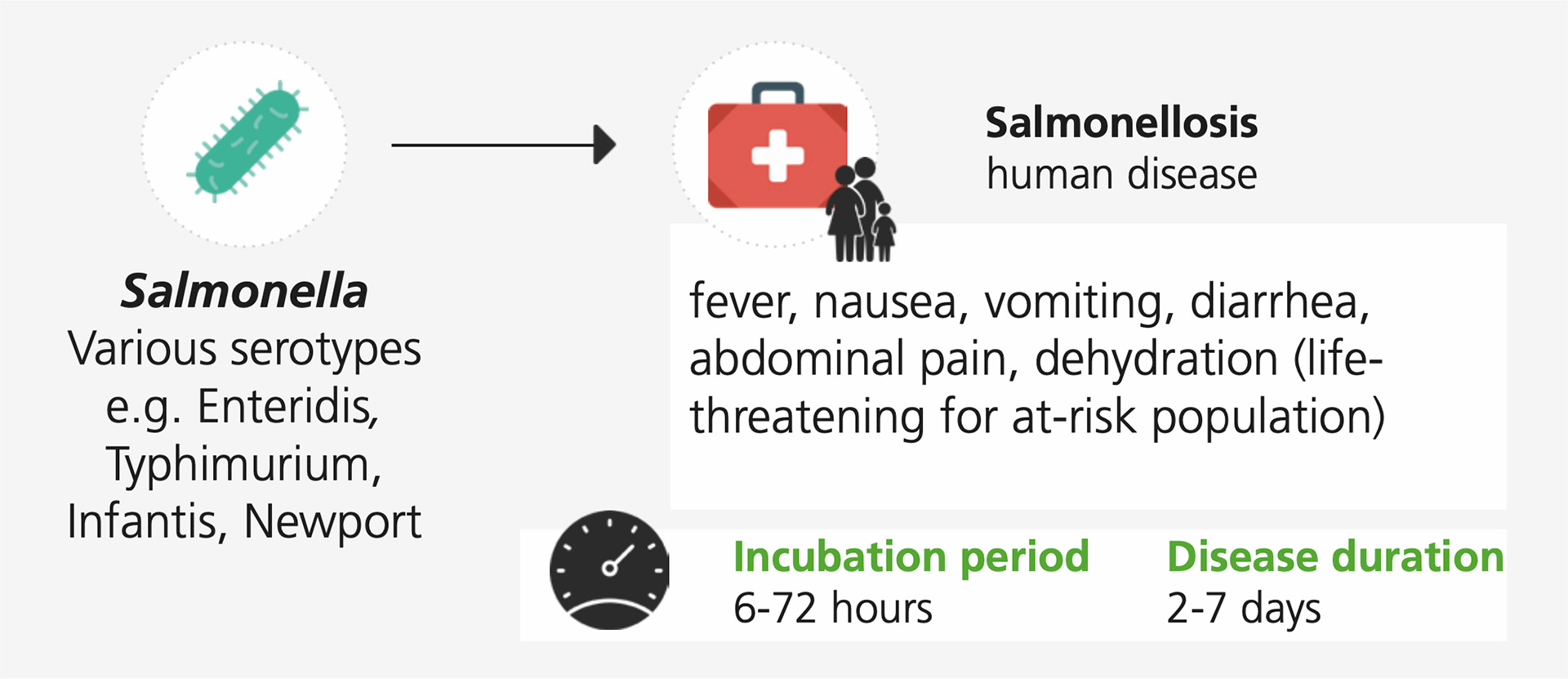
Members of the genus are facultative intracellular pathogens capable of invading and surviving within host cells, leading to a spectrum of diseases ranging from self-limiting gastroenteritis to invasive systemic and occasionally fatal infections. Clinically, Salmonella serovars are categorized into two principal groups: typhoidal Salmonella, including S. Typhi and S. Paratyphi, which are human-adapted pathogens responsible for typhoid and paratyphoid fever and transmitted primarily via the fecal–oral route between humans; and non-typhoidal Salmonella (NTS), such as S. Typhimurium and S. Enteritidis, which possess a broad host range and constitute major agents of foodborne and zoonotic gastroenteritis globally.
From a regulatory and risk assessment perspective, Salmonella is classified as a major foodborne pathogen under international frameworks, including Codex Alimentarius, EFSA, and FDA/FSIS. This designation reflects its notable environmental persistence and relatively low infectious dose, commonly estimated to range between 10¹ and 10³ organisms depending on the food matrix and host susceptibility. Consequently, food safety risk management strategies focus predominantly on non-typhoidal serovars, given their substantial contribution to the global burden of foodborne disease.